
Discovering History
By Naa Atswei Laryea, AAI Research Associate
& Mora McLean, AAI Historian and President Emeritus
This January, the Africa-America Institute embarked on a three-session journey Following the Gold Road. In partnership with the Center for African Studies at Howard University and African Studies Center at Boston University, the series reframed global medieval history by centering Africa’s essential role in the world economy through its prized resource—gold—and by spotlighting its contributions to art, architecture, learning, and governance. Grounded in our liberatory education impact pillar that seeks to eliminate the ideology of human hierarchy by disseminating accurate, unbiased, and accessible knowledge, the convening marked our 10th Annual State of Education Conference (SOE), engaging scholars, educators, and our Global African community.
Leading scholars and esteemed interlocutors guided us on an enriching path of inquiry and insight:
Professor Michael Gomez and Professor Madina Thiam helped us to better understand the need to critically analyze West African histories and arrive at more accurate conclusions by studying the accounts of scholars from within the region. They pointed to, for instance, discrepancies between, on the one hand, external sources that elevate the figure of Mansa Musa and, on the other, internal West African historical narratives that chronicle the impact of his reign and pilgrimage to Mecca in a more nuanced and contextualized manner.
Professor Sarah Guerin and Yinka Adegoke helped us to understand that Africa in antiquity and the Middle Ages was a major player in global commercial and cultural exchanges on its own terms, and why contemporary archeologists view the African continent as the most exciting frontier of the discipline:
From Professor Fallou Ngom and Professor Gana Ndiaye, we learned about understudied African indigenous intellectual written histories that exist in tandem with the oral history traditions of the region, and the interplay between African and non-African languages:
SOE 2026 builds on AAI’s institutional history and past programs.
AAI’s co-founder and ardent scholar William Leo Hansberry illuminated the existence and significance of ancient and medieval civilizations at a time when US historians largely neglected the subject. As cited by anthropologist Justin Dunnavant in his article “Rehistoricizing African Archaeology through the Archives: The Intellectual Life of William Leo Hansberry,” fellow historian Williston H. Lofton credited Hansberry – along with W.E.B DuBois and Carter G. Woodson – with doing “more than any other scholar in these early days to advance the study of the culture and civilization of Africa.” The Africa-America Institute was thus not only born out of its co-founders’ desire to connect global Africa, but also to spotlight and build community through its rich history.
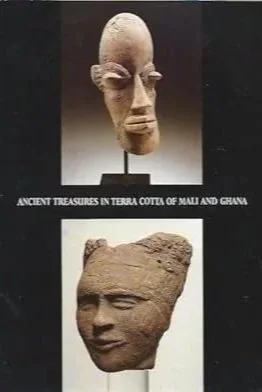
In the fall of 1981, AAI curated and hosted an exhibition, "Ancient Terra Cotta from Mali and Ghana”, which traveled to Chicago.
For AAI’s 8th Annual SOE, scholar Dr. Shayla Monroe presented the process of archeological research that has helped explain the dramatic transformation of the West African Sahel from a fertile region teeming with towns and trade routes to desert.
Under the theme “My Legacy, My History”, our School Services program has featured lessons on Ancient and Medieval Africa taught across Southeast Michigan schools.
Members of our alumni community collectively champion Africa’s deep and vast history. As highlighted in our 6th Annual SOE on "Teaching Africa in K-12 Education", Ann Therese Ndong-Jatta, former Director of the UNESCO Multisectoral Regional Office for Eastern Africa in Nairobi and distinguished AAI alumna, championed the General History of Africa Pedagogy Initiative, which aims to mainstream the General History of Africa into African education systems.
The Gold Road offers a wealth of knowledge to enrich our minds and inspire us towards building a liberatory and sustainable Global African future. As we continue to follow it, we invite educators and intellectually curious people from all walks of life to visit our School Services resource page to learn more. We look forward to having you join our SOE convening next year!